
This week's highlights run from Reconstruction-era Georgia to the sands of the Yorkshire coast. Leading off is a discovery we're especially glad to offer: 31 consecutive 1870 State of Georgia gold bonds signed by Governor Rufus Bullock. Alongside it are two of American numismatics' best-known key dates, a numbered Adrian Peterson Exquisite card, and a 1914 motor-racing award. All five are in our eBay store and close between November 9 and November 11.
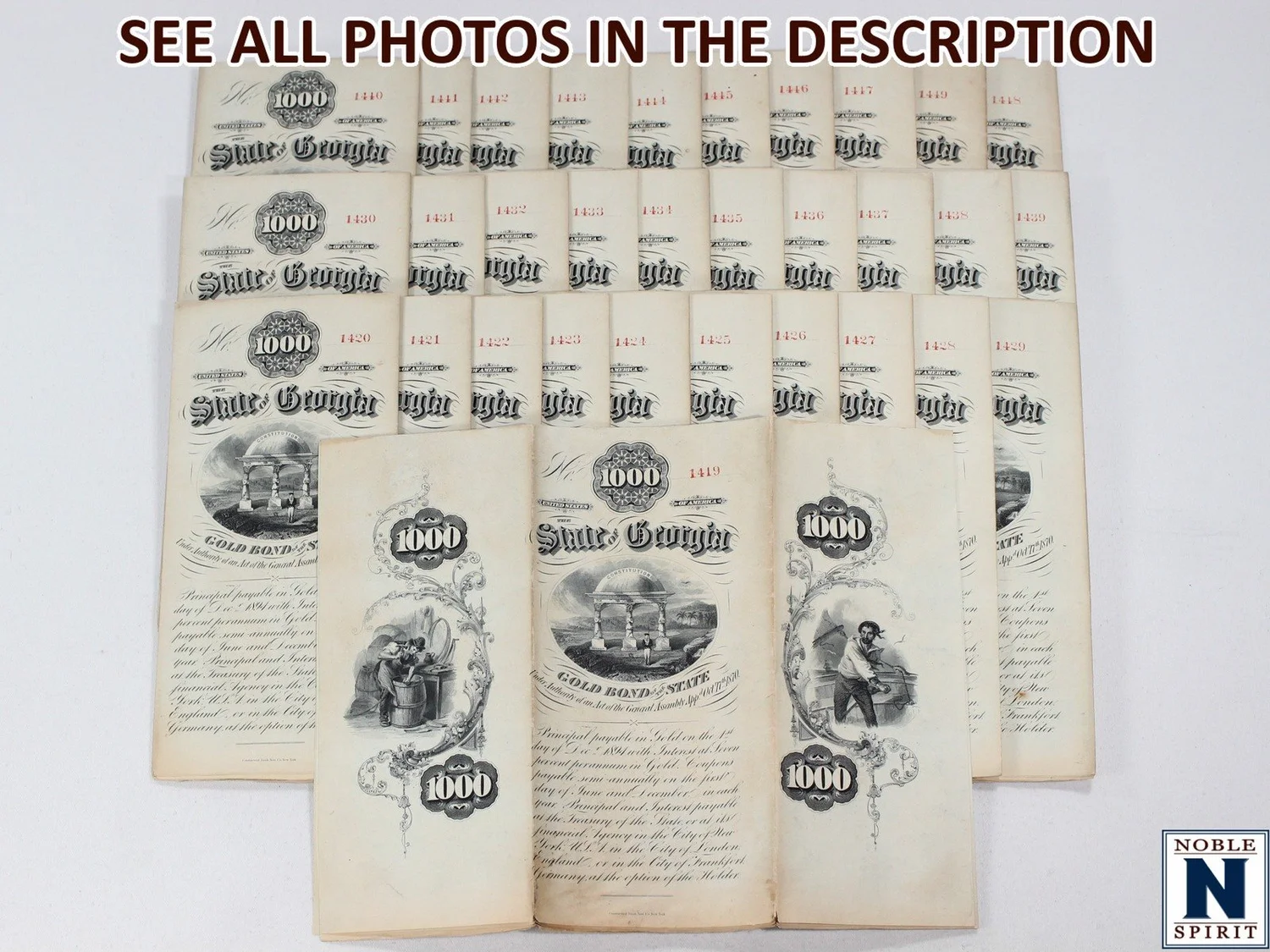
31 Consecutive 1870 State of Georgia $1,000 Gold Bonds, Signed by Governor Rufus Bullock
This is a run of 31 consecutive-serial State of Georgia $1,000 7% gold bonds from the 1870 issue, printed by the Continental Bank Note Co. of New York and signed by Reconstruction governor Rufus B. Bullock. Single bonds from this issue appear in scripophily sales now and then, usually one at a time; to our knowledge, a consecutive group in this condition and quantity was previously unknown. The bonds are fresh, with bright green printing, bold signatures and sharp vignettes, and the coupon sheets still attached. They were never redeemed: Bullock-era borrowing became the center of Georgia's fight over its Reconstruction debt, Bullock resigned in October 1871 and left the state, and he was acquitted when tried in 1876. That history gives the bonds appeal well beyond bond collecting, to collectors of Southern history and financial history. Single examples have sold for modest sums (one VF bond brought £45 at Spink), but a consecutive run like this has no direct comparable, so this auction will set its own price.
Read the full auction description
State of Georgia $1,000 7% gold bond from the 1870 issue, serial no. 1419. It was authorized by the Act of October 17, 1870, and printed by Continental Bank Note Co. of New York. Gov. Rufus B. Bullock, Secretary of State David G. Cotting and Comptroller Madison Bell all signed it. It's a real collectible, but it has no redemption value. During Reconstruction, newspapers attacked these as the "fraudulent bonds issued by Bullock," and Georgia refused to pay them. Its 1877 constitution later made that refusal permanent.
It has a full sheet of coupons, numbered 3 through 49. Coupons 1 and 2 seem to be missing, which suggests the early 1871 interest was collected before the default. The signatures are bold, the green is bright, and the vignettes (the Constitution arch and the dock and cotton-wagon scenes) look sharp.
With his power evaporating and charges mounting against him, Bullock resigned from office on October 23, 1871, and fled the state. He resigned secretly and left to avoid impeachment by the newly elected Democratic majorities in both state houses. Democratic newspapers said outright that he had absconded. One Atlanta paper complained that Secretary of State Cotting, whose signature is on your bond, had by order of Bullock, executed, sealed and delivered to him all the bonds, and no one at the office could say where they were.
The trial: In 1876 he was arrested and returned to Georgia, where he stood trial on embezzlement charges and was found not guilty due to a lack of evidence. He then stayed in Atlanta, where he became president of the Atlantic Cotton Mills, president of the Chamber of Commerce, and director of the Union Pacific Railroad. That's an odd path for a man people saw as a runaway thief.
Where the money went: Most of the bond money went to railroad promoters and people close to the administration. Investigators looked hardest at Kimball's transactions in selling and hypothecating the bonds of the State and its indorsed bonds; also, the whole of his transactions in regard to the Brunswick and Albany Railroad. That's Hannibal Kimball. They also looked at Foster Blodgett, who ran the state-owned Western & Atlantic Railroad. The newspapers' complaints are a little ironic, too: in 1872 a market observer had noted that Bullock's gold bonds sold for less than the value of a very cheap song.
He had the physical bonds in his hands, but most of them had gone to New York bankers before he left the state. In January 1871, ten months before he fled, a Georgia paper reported that about $5,000,000 of all these bonds were sent to New York in January last. They went to the state's New York financial agents (Henry Clews & Co. was the main one), who were supposed to sell them or pledge them as collateral for loans.
So the charge at the time wasn't really that he ran off with a trunk of bonds. It was that he had signed and released too many of them, in violation of the law, and they were already out with bankers and railroad promoters by the time he left. That's also how bonds passed from the New York agents and investors through the market, and nobody could cash them in after Georgia repudiated them.
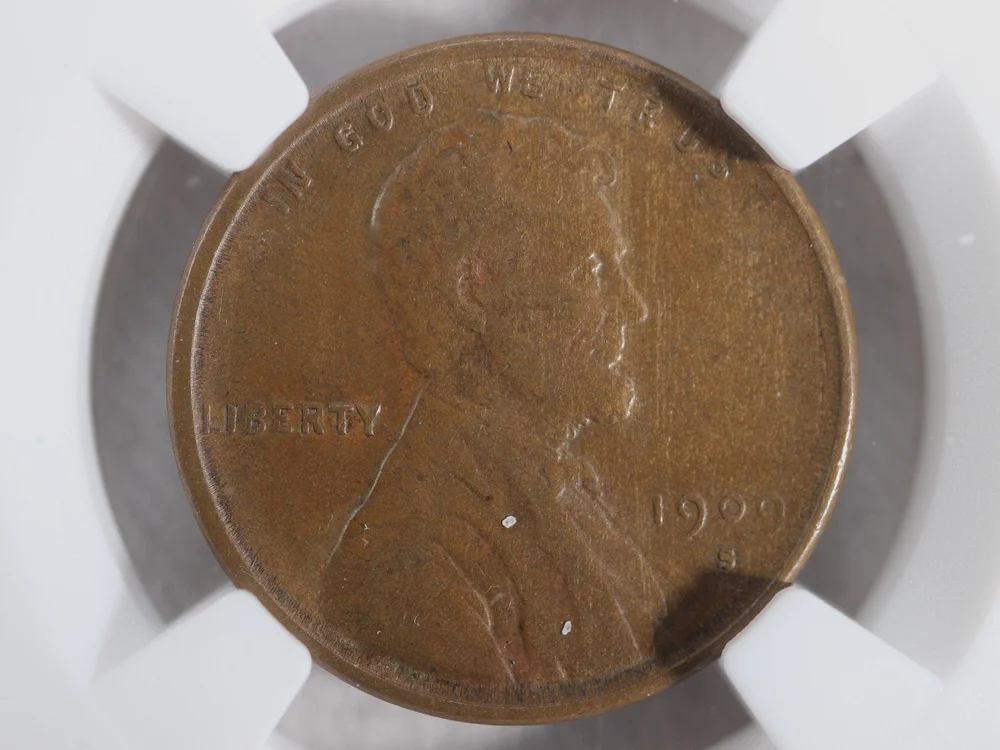
1909-S VDB Lincoln Cent, NGC AU55 BN
The 1909-S VDB is the best-known key date in the Lincoln cent series and a coin nearly every collector of the series sets out to own. San Francisco struck only 484,000 of them, the lowest mintage of any regular-issue Lincoln cent. The designer Victor David Brenner's "VDB" initials were removed from the reverse within weeks of the coin's release, which made this short-lived variety famous almost at once. This example is NGC-certified AU55 Brown, showing only light wear on the high points. In the sales we checked, PCGS AU55 examples brought $1,895–$2,135 in 2026, up from about $1,320–$1,680 in 2025, so the trend for nice circulated examples has been gently upward.
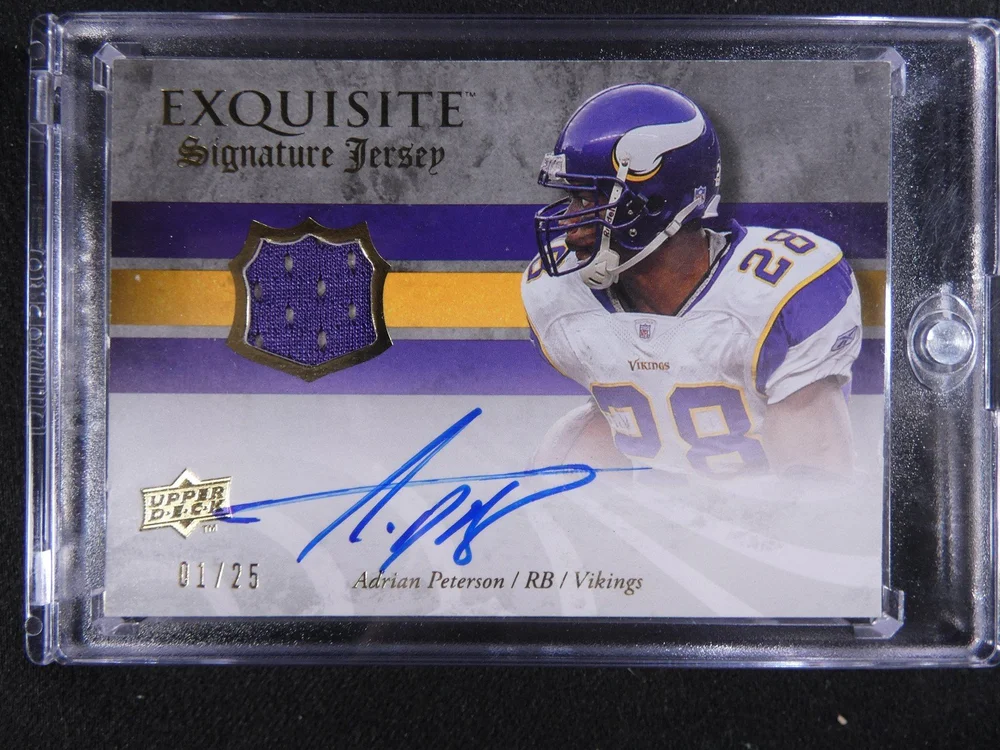
2008 Upper Deck Exquisite Adrian Peterson Autograph Jersey Card, Numbered 1/25
Upper Deck's Exquisite Collection was the top-tier football release of its era, and its autograph-and-memorabilia cards remain a reference point for high-end football collectors. This Adrian Peterson card pairs his autograph with a jersey swatch and is serial-numbered 1 of 25. Peterson was the NFL's Offensive Rookie of the Year in 2007 and its MVP in 2012, when he rushed for 2,097 yards, so his early cards hold a steady following among Vikings fans. The card is offered raw and described as Near Mint. Low-numbered Exquisite cards trade only occasionally, and we couldn't find reliable recent sales of this exact card to quote, so this auction is a real test of its market.
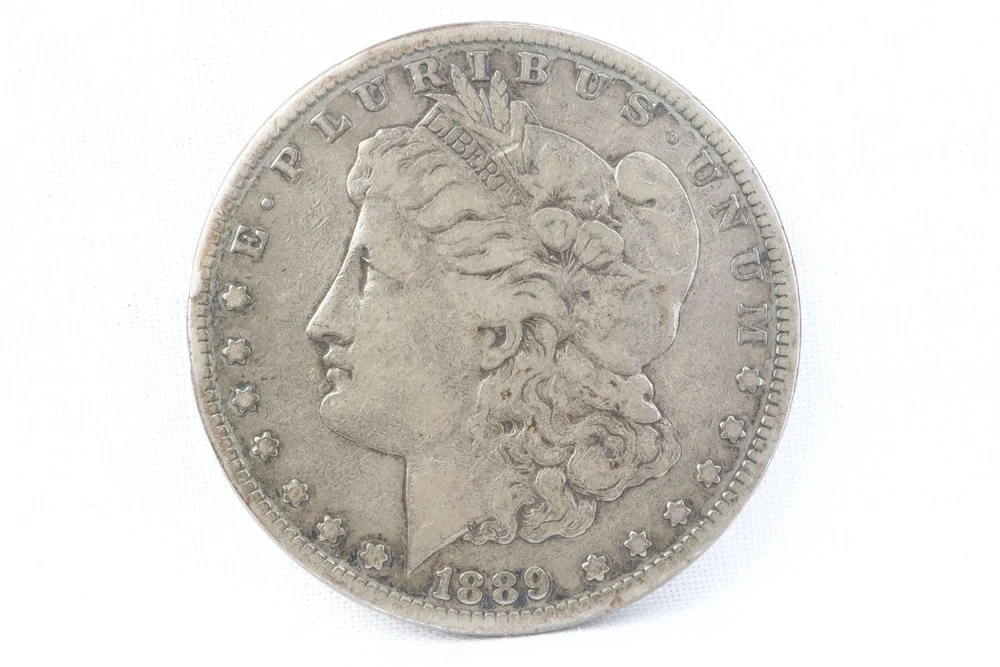
Key-Date 1889-CC Morgan Silver Dollar, Choice F/VF
The 1889-CC is the key date among the Carson City Morgan dollars, with a mintage of just 350,000 from the Nevada mint. Collectors of Carson City coinage, and anyone assembling a full Morgan set, eventually need one. This example is uncertified and described as Choice F/VF. A raw F/VF example sold on eBay for $1,330 in October 2026, and certified VF20 to VF35 coins mostly brought $2,000–$3,000 between August and October 2026. Prices in the sales we checked have been steady through late 2026.
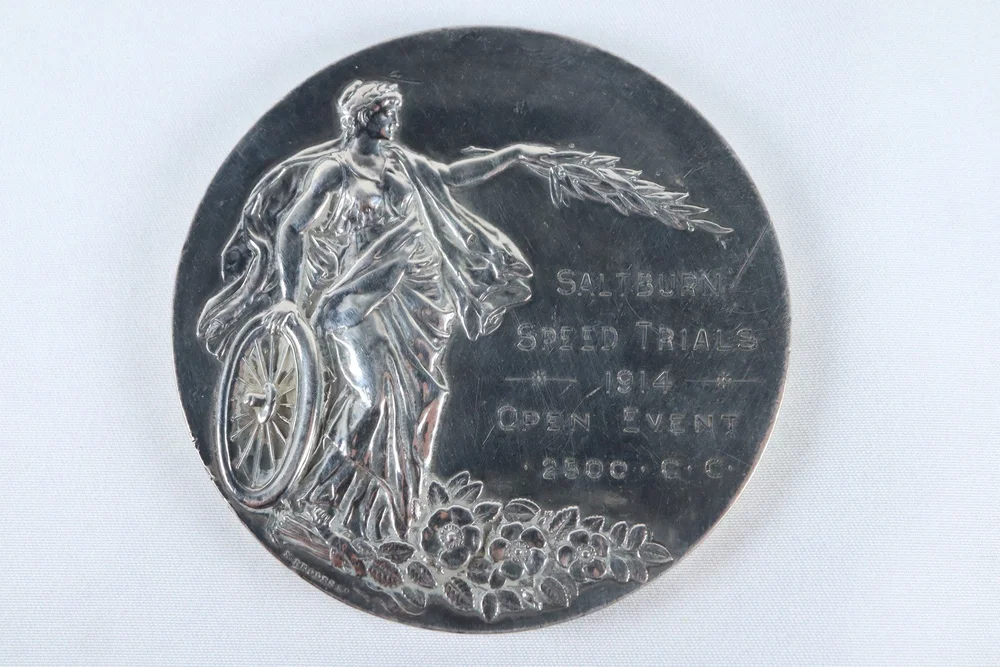
1914 Yorkshire Saltburn Speed Trials Silver Award Medal
In the early days of motoring, the hard sands at Saltburn-by-the-Sea on the Yorkshire coast drew crowds of tens of thousands to watch cars race against the clock. Motor racing there began in 1904, and drivers such as Algernon Guinness (1909–10) and Pietro Bordino in the 28-litre Fiat (1911) set British and world-class speeds on the beach. This substantial silver award, weighing 221 grams, comes from the 1914 trials. Pre-war motor-sport awards appeal to automobilia collectors as well as medal collectors, and they rarely come to market. We found no reliable recent sales of a comparable Saltburn award to quote.
Have a similar item? Contact us to consign or sell
Whether it's a single key-date coin or a family archive, we offer free evaluations.
Contact Us