
Cholera Disinfected Letters: Postal History from an Age of Epidemics
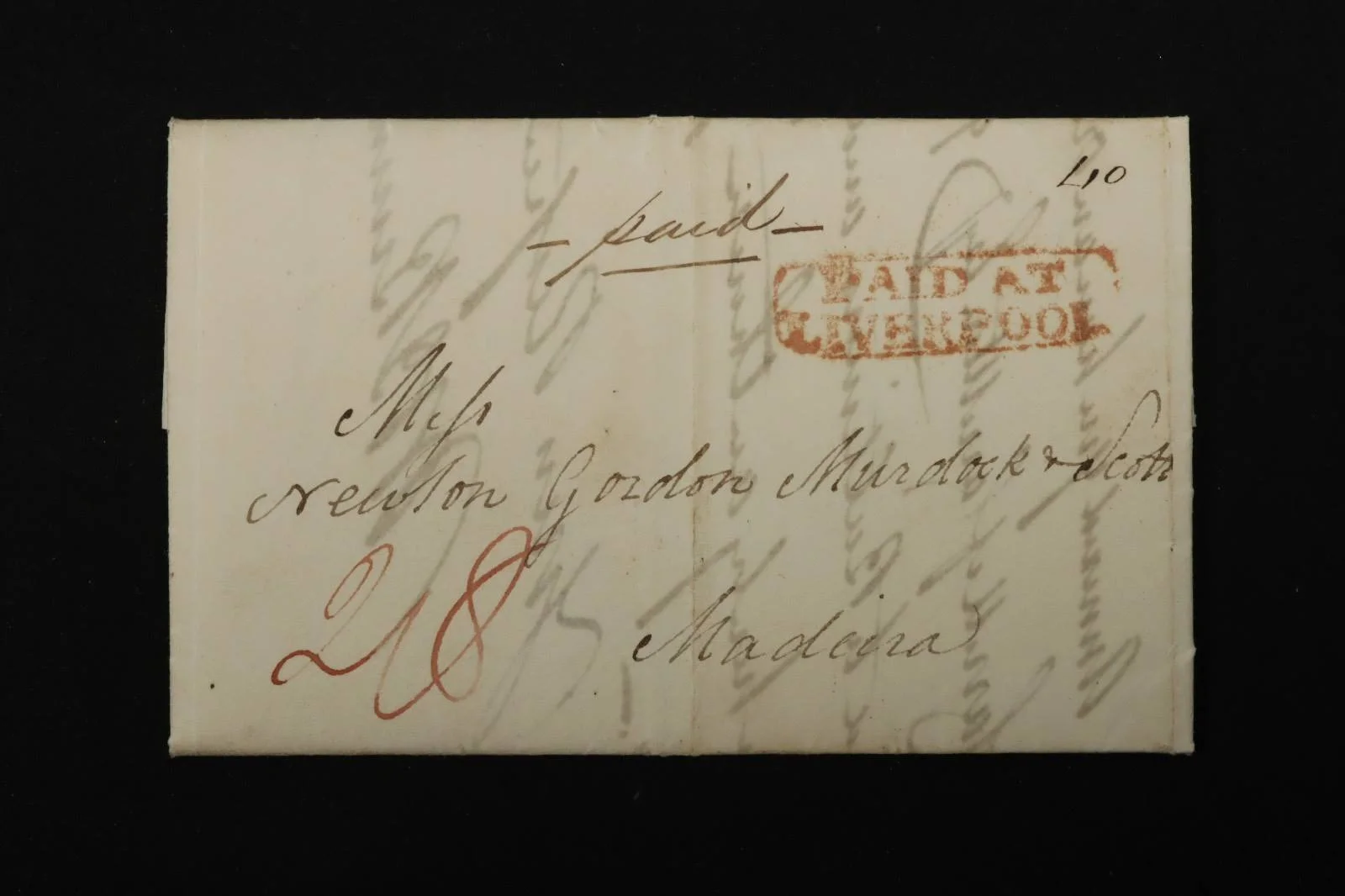
Long before modern medicine understood the true causes of cholera and other infectious diseases, postal authorities treated the mail itself as a possible carrier of contagion. During the 19th century, letters moving through ports, quarantine stations, and international trade routes were sometimes disinfected before delivery. These “cholera disinfected” covers are fascinating artifacts from a time when fear of epidemic disease shaped not only public health policy, but also the physical movement of correspondence around the world.
Explore the Collection
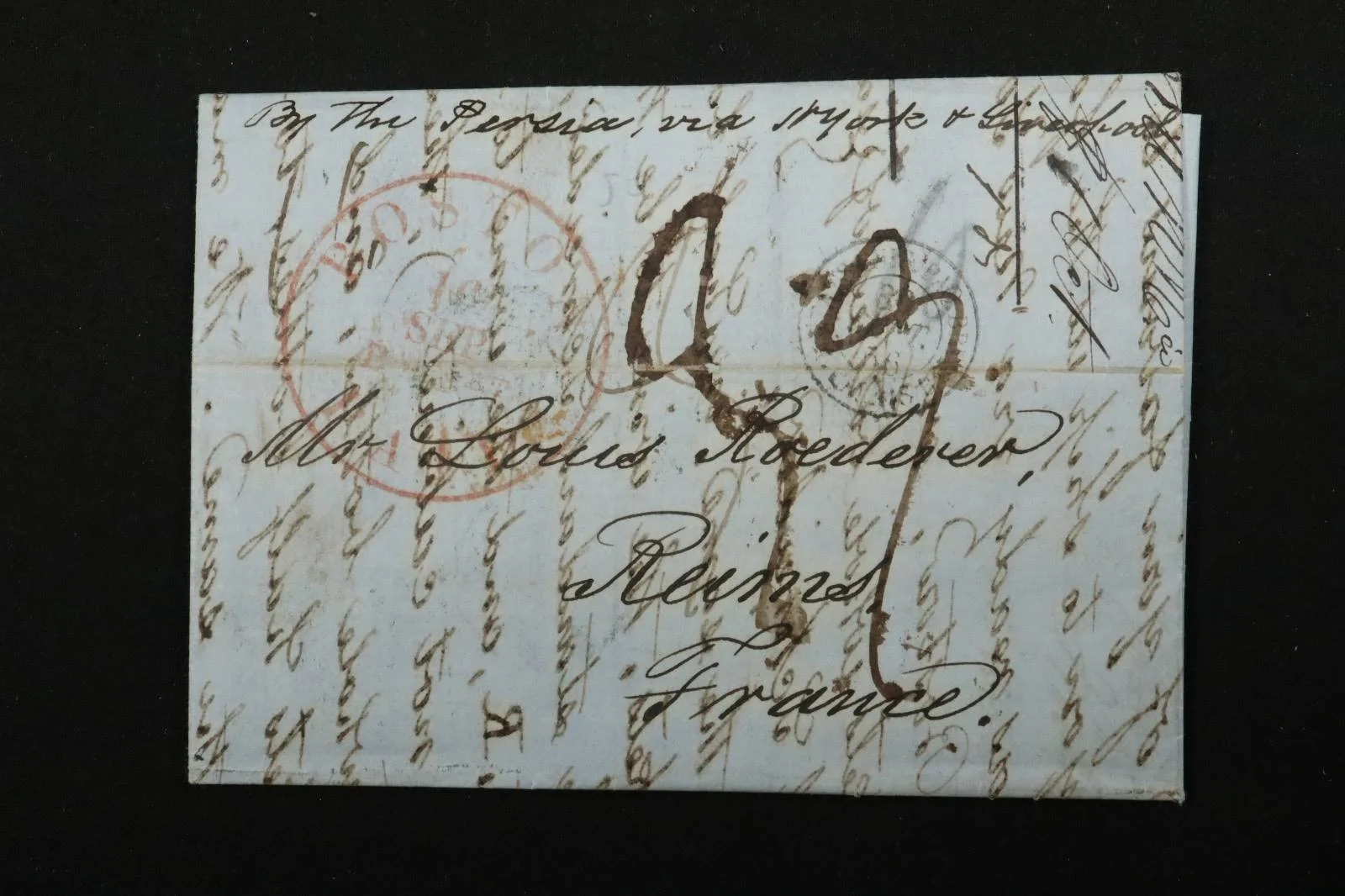
Cholera Disinfected Letter 1856 Boston MA to Reims, France
Cholera Disinfected Letter 1833 Bordeaux to Santander, Spain
Cholera Disinfected Letter 1849 New York to Madeira, Portugal
Cholera Disinfected Letter 1831 Baltimore to Madeira, Portugal
Cholera Disinfected Letter 1841 Alexandria to Madeira, Portugal
This group of letters, dating from 1831 to 1859, reflects that extraordinary intersection of medicine, commerce, travel, and postal history. The routes include Baltimore, New York, Richmond, Alexandria, Boston, Bordeaux, and Nantes, with destinations such as Madeira, Reims, Santander, and Bilbao. Many of these locations were important maritime or commercial centers, making them natural checkpoints for mail moving across regions affected by recurring cholera outbreaks.
Disinfection could take several forms. Letters might be slit, pierced, fumigated with sulfur or other vapors, exposed to smoke, or otherwise treated so that the supposed disease-carrying “miasma” could be neutralized. While many of these methods were based more on fear and theory than scientific fact, they left behind visible marks that collectors can study today. Stains, cuts, punctures, and quarantine markings transform each cover into a small surviving document of 19th-century public health practice.
For collectors, cholera disinfected mail offers far more than a postal route or cancellation. Each letter is a tangible reminder of how societies responded to disease before germ theory, vaccines, antibiotics, and modern epidemiology. These covers preserve the anxieties of their age in paper form, making them compelling pieces for collectors of postal history, medical history, maritime mail, and epidemic-related artifacts.